Thanksgiving Read Alouds for Kindergarten and 1st Grade

Saturday, November 7, 2026
How to Cook a Turkey writing activity cover

This post contains Amazon affiliate links. As an Amazon Associate I earn from qualifying purchases, at no extra cost to you.

The week before Thanksgiving is a lot. Little ones are excited, the schedule is off, and you still want real learning to happen. A stack of good read alouds is my favorite way to keep that week calm and still meaningful.

Some of my favorite moments all year were hearing what my little ones were thankful for after a read aloud.

Here are 8 Thanksgiving books that work beautifully with kindergarten and 1st grade.

  1. Bear Says Thanks by Karma Wilson. Bear wants to host a feast but his cupboard is bare, and his friends show him that sharing what you have is enough.
  2. A Turkey for Thanksgiving by Eve Bunting. Mr. and Mrs. Moose invite a turkey to dinner, and it turns out he is a guest, not the meal. Kids love the twist.
  3. Turkey Trouble by Wendi Silvano. Turkey tries on one silly disguise after another so he will not end up on the table. Great for making predictions.
  4. The Thankful Book by Todd Parr. Bright, simple pages about everyday things to be thankful for. Perfect before a gratitude writing page.
  5. 'Twas the Night Before Thanksgiving by Dav Pilkey. A class field trip to a turkey farm ends with a rescue. A fun rhyme to read aloud.
  6. 10 Fat Turkeys by Tony Johnston. A counting backwards rhyme that sneaks in a little math.
  7. Thanksgiving Is for Giving Thanks! by Margaret Sutherland. A gentle list book that works well for your youngest listeners.
  8. Run, Turkey, Run! by Diane Mayr. Turkey hides all over the farm so the farmer cannot find him. Easy to act out together.

Pair the books with writing

After all those turkey stories, my students are ready to write their own. The How to Cook a Turkey Writing activity turns that excitement into procedural writing:

  • 12 sequencing and vocabulary cards
  • A sequencing mat so students put the steps in order before they write
  • A themed flipbook for publishing their first, next, then, last

It is low prep, which is exactly what you want the week before a holiday.

What teachers are saying

"The graphics are adorable!!" (TPT review)

Want my free editable lanyard class list? It keeps every name handy for fire drills and field trips, and you will get my new classroom ideas in your inbox too.

Yes, send my class list

Get How to Cook a Turkey Writing on TLC

Made by a teacher who's been right where you are.

Jessica Ann Stanford, Teachers Follow Teachers

Free Numbers 0 to 10 Handwriting Practice for Preschool and Kindergarten

Thursday, November 5, 2026
Free numbers 0 to 10 handwriting practice worksheets where students trace, write and solve a maze inside each number

Okay, real talk: little ones learn to write numbers the way they practice them, and fixing a backwards 5 in January is a lot harder than teaching it right in September. These free number pages give your students a clear start for every number from 0 to 10, and they are ready to print today.

What is in this free number handwriting practice?

  • 11 number pages, 1 for each number 0 to 10
  • The number word at the top of every page
  • A maze inside a big number, so students trace the shape while they play
  • 3 rows to trace and 3 rows to write on their own
  • Starting dots and arrows that show where each number begins
  • 14 pages in all

It builds number formation, fine motor pencil control and number recognition, and it lines up with K.CC.A.3, writing numbers from 0 to 20.

Get the free numbers 0 to 10 handwriting pages

4 easy ways to use it in your classroom

  1. Morning work. 1 number a day as students come in. The maze is the reward for finishing the rows. A teacher shared: "This was such a fun activity! My students were motivated to do the writing practice so they could do the maze! Thanks!"
  2. Small group and intervention. Sit with the students who still start their numbers at the bottom. Another teacher said: "I used this with struggling students and found that it was very helpful in number formation."
  3. Math centers and early finishers. Keep a basket of pages ready so fast finishers always have meaningful practice.
  4. A number book they keep. Staple the 11 pages into a little book students add to all year, or slide pages into sheet protectors for dry erase practice.

Want my free editable lanyard class list? It keeps every name handy for fire drills and field trips, and you will get my new classroom ideas in your inbox too.

Yes, send my class list

Tip for your youngest writers

Say the path out loud while they trace: "Start at the dot, follow the arrow." When the words match the motion every time, the right formation sticks. Once 0 to 10 feels easy, move on to my free number writing practice 0 to 20.

Ready for more?

When your students are ready for the next step, these pick up right where the freebie leaves off:

Looking for pencil grips and fine motor tools? See what I use in my Amazon favorites. As an Amazon Associate I earn from qualifying purchases.

Grab the free class list

Want my free editable lanyard class list? It keeps every name handy for fire drills and field trips, and you will get my new classroom ideas in your inbox too.

Yes, send my class list

See every freebie in one place: my Free Library

Made by a teacher who's been right where you are.

Jessica Ann Stanford, Teachers Follow Teachers

How to Build a Snowman Writing: A Winter Sequencing Activity for K-2

How to Build a Snowman writing activity for K-2 cover

Pull up a chair, because if you are planning December writing, you have probably searched for how to build a snowman writing ideas more than once. Sequencing is hard for little writers. They know what a snowman is, but ask them to tell you the steps in order and the story turns into one long "and then." Here is the how-to writing activity I would reach for.

How to Build a Snowman writing activity preview 1How to Build a Snowman writing activity preview 2How to Build a Snowman writing activity preview 3

Why a snowman works for how-to writing

Every child knows the steps already. Roll the snow, stack it up, add the hat and arms. When the topic is familiar, students can put their energy into the hard part, which is putting steps in order and writing them down with first, next, then and last.

What is inside

How to Build a Snowman Writing Activity is a printable PDF, 10 pages, for kindergarten, 1st and 2nd grade.

  • 1 snowman writing flipbook: a cover page with hat and arm pieces, plus first, next and last writing pages
  • 12 sequencing cards with matching vocabulary on the back
  • 1 sequencing mat, steps 1 to 6, to put the cards in order before writing
  • Teacher notes for printing and using the cards

How it runs in a room

Start with the cards. Students put the 12 pictures in order on the mat and say each step out loud to a partner. The vocabulary on the back of each card gives them the words they need. Once the order feels solid, they move to the flipbook and write their steps, then build the snowman on the cover with the hat and arm pieces. It is low prep, so it works for a writing center, a sub plan or a December bulletin board. You can flip through every page in the How to Build a Snowman preview on TPT.

What teachers are saying

"This was a great resource to use for teaching how to sequence writing. My students enjoyed this and I found the visual were very helpful!" (TPT review, May 2025)

"This is a great resource for writing with my first grade students. It was just perfect for my use. Thank you." (TPT review, Feb 2024)

"Fun winter writing activity!" (TPT review)

Want my free editable lanyard class list? It keeps every name handy for fire drills and field trips, and you will get my new classroom ideas in your inbox too.

Yes, send my class list

Pair it with these in my store

Want more winter writing ideas? Read Winter Writing Centers for Kindergarten, 1st and 2nd Grade.

Get the snowman flipbook

Students who can tell the steps in order write more, and write better. If that is where your class is headed this December, this one gets them there.

Get How to Build a Snowman on TPT

Want my free editable lanyard class list? It keeps every name handy for fire drills and field trips, and you will get my new classroom ideas in your inbox too.

Yes, send my class list

Made by a teacher who's been right where you are.

Jessica Ann Stanford, Teachers Follow Teachers

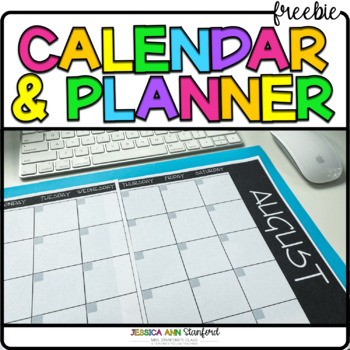
Free Blank Teacher and Student Calendar and Planner Printable

Tuesday, November 3, 2026
Free blank teacher and student calendar and planner printable PDF for lesson plans, homework and behavior tracking

If you're anything like me, you have bought a pretty planner in August and stopped using it by October because it never fit the way you teach. This free blank calendar and planner fixes that. You fill in the dates, so it works for any month, any year, and any way you plan.

What is in it?

  • Blank calendar pages you date yourself, so you can reuse them year after year
  • Blank planner pages for lesson plans, assignments or plain old organization
  • A printable PDF, ready to copy and go

More than 32,000 teachers have downloaded it, and it holds 4.76 stars from 79 ratings.

Get the free teacher and student calendar

Ways to use it in your classroom

  1. Your own teacher planner. One teacher shared: "I love these calendar pages. So helpful that you fill in the dates so you can use it year after year. I used this to make my own planner."
  2. Student assignment book. Another said: "I used this as well as my students for when they wanted to keep track of assignment due dates."
  3. Behavior tracking. I have bound the pages together to make a book that tracks behavior for my students. Bound the same way, it also makes a homework book.
  4. Calendar practice. Give each student a blank month and let them fill in the days. It is a simple way to practice reading a calendar.

Want my free editable lanyard class list? It keeps every name handy for fire drills and field trips, and you will get my new classroom ideas in your inbox too.

Yes, send my class list

A quick tip

Print the whole year at once and fill in only the next month's dates on the first school day of each month. Your planner stays ready, and you never waste a page on a month that changes.

Ready for more?

Need pens and binders to build it? The supplies I love are in my Amazon favorites. As an Amazon Associate I earn from qualifying purchases.

Grab the free class list

Want my free editable lanyard class list? It keeps every name handy for fire drills and field trips, and you will get my new classroom ideas in your inbox too.

Yes, send my class list

See every freebie in one place: my Free Library

Made by a teacher who's been right where you are.

Jessica Ann Stanford, Teachers Follow Teachers

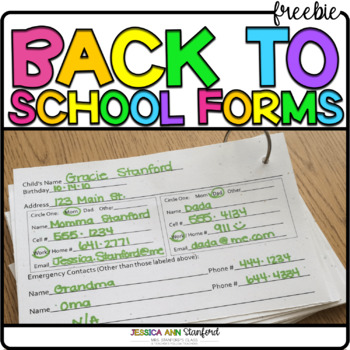
Free Student Emergency Contact Form for Teachers

Friday, October 30, 2026
Free printable student emergency contact form cards on a class ring with name, birthday, address, phone number, pickup and emergency contacts

Teacher friend, let's be honest: when the fire alarm goes off or the field trip bus pulls up, nobody wants to dig through a folder of papers. This free emergency contact form puts every student's key info on 1 class ring you can grab and go.

What is in it?

  • Double sided emergency contact cards, 1 per student
  • Student name and birthday
  • Address and phone number
  • Pickup information
  • Emergency contacts
  • Sized to fit on a class ring

Send them home the first week, punch a hole in each one, and your whole class is on 1 ring.

Get the free student emergency contact form

Ways to use it in your classroom

  1. Back to school packet. Add it to your meet the teacher or first day folder. One teacher shared: "This is a great form for the beginning of school. I also loved that it is a half page."
  2. Fire drills and lockdowns. Keep the ring on a hook by the door so it leaves the room with you. Another teacher said it is "Easy and much better than flipping through papers."
  3. Field trips. The ring is small enough to toss in your bag, so every parent phone number comes with you.
  4. Sub tub. Leave the ring where your substitute can find it, so pickup changes are never a guess.

Want my free editable lanyard class list? It keeps every name handy for fire drills and field trips, and you will get my new classroom ideas in your inbox too.

Yes, send my class list

A tip to use it year after year

Laminate the cards before they go on the ring. One teacher wrote: "I have laminated them and use rubbing alcohol to erase the sharpie at the end of each year."

Ready for more?

My favorite classroom supplies are in my Amazon favorites. As an Amazon Associate I earn from qualifying purchases.

Grab the free class list

Want my free editable lanyard class list? It keeps every name handy for fire drills and field trips, and you will get my new classroom ideas in your inbox too.

Yes, send my class list

See every freebie in one place: my Free Library

Made by a teacher who's been right where you are.

Jessica Ann Stanford, Teachers Follow Teachers

Free Book Report Template for Kindergarten and 1st Grade

Thursday, October 29, 2026
Free simple book report template for kindergarten and 1st grade with lines for title, author, illustrator, a picture box and a sentence

Okay, real talk: a book report for a 5-year-old should not need a 4-page packet. This 1-page book report template works with any book your students read, and it is free.

What is on the page?

  • Title
  • Author
  • Illustrator
  • A big box to draw their favorite part
  • 1 sentence line to tell about the book
  • A bonus page of writing lines for students ready to write more

Because it works with any book, you print 1 stack and use it all year.

Get the free book report template

How teachers are using it

  1. Read to self center. One teacher shared: "I want them to not only read but to be able to tell me about it as well."
  2. Homework. Another uses it "to practice reading comprehension and summarizing a story."
  3. Weekly check. I used it as a weekly assessment and graded it with my free kid friendly rubric.
  4. Book report journal. Save every finished page in a folder. By May your students have a whole journal of the books they read.

Want my free editable lanyard class list? It keeps every name handy for fire drills and field trips, and you will get my new classroom ideas in your inbox too.

Yes, send my class list

Make it easier for your youngest readers

Model the first one together after a read aloud. Write the title and author on the board, let students copy, then everyone draws. Your early writers can dictate the sentence while your ready writers use the bonus lines page.

Ready for more?

Need books to try it with? The read alouds my own kids love are in my Amazon favorites. As an Amazon Associate I earn from qualifying purchases.

Grab the free class list

Want my free editable lanyard class list? It keeps every name handy for fire drills and field trips, and you will get my new classroom ideas in your inbox too.

Yes, send my class list

See every freebie in one place: my Free Library

Made by a teacher who's been right where you are.

Jessica Ann Stanford, Teachers Follow Teachers

Free Number Writing Practice 0 to 20 for Preschool and Kindergarten

Free number writing practice worksheet 0 to 20 where students trace, stamp, write, cut and paste each number

If you're anything like me, you want number practice that keeps little hands busy and does not take your whole planning period to prep. This is the freebie teachers download from my store more than any other, and it is yours to grab today.

What is in this free number writing practice?

Each page takes 1 number from 0 to 20 and has students:

  • Trace it with a pencil to build correct formation
  • Stamp it with number stamps or a bingo dauber
  • Write it on their own
  • Cut and paste the matching number pieces

That is pencil skills, scissor skills and number recognition on 1 page. It lines up with K.CC.A.3, writing numbers from 0 to 20.

Get the free number writing pages

4 easy ways to use it in your classroom

  1. Morning work. One number a day as students walk in. A teacher shared: "This was perfect for morning work/review as students came into school."
  2. Math centers. Put out stamps and a basket of pages. Another teacher said: "Students enjoy stamping the numbers."
  3. Beginning of year check. Give a few pages in the first weeks to see who can form which numbers.
  4. Laminate and reuse. I laminated mine and put velcro dots on the cut pieces for my word work area, so they last all year.

Want my free editable lanyard class list? It keeps every name handy for fire drills and field trips, and you will get my new classroom ideas in your inbox too.

Yes, send my class list

Tip for your youngest writers

Start with 0 to 10 and save 11 to 20 for later in the year. If you want an even gentler start, I also have free number formation pages for 0 to 10.

Ready for more?

When your students are flying through numbers, these pick up right where the freebie leaves off:

Looking for number stamps and fine motor tools? See what I use in my Amazon favorites. As an Amazon Associate I earn from qualifying purchases.

Grab the free class list

Want my free editable lanyard class list? It keeps every name handy for fire drills and field trips, and you will get my new classroom ideas in your inbox too.

Yes, send my class list

See every freebie in one place: my Free Library

Made by a teacher who's been right where you are.

Jessica Ann Stanford, Teachers Follow Teachers

Winter Writing Centers for Kindergarten, 1st and 2nd Grade

Winter writing centers for kindergarten, 1st grade and 2nd grade with writing prompts, lined paper and a snowman flipbook

Hey Bestie, if you are looking for winter writing centers for kindergarten, 1st grade and 2nd grade, this post is for you. January is when my students finally had the stamina to write more than one sentence, and I wanted centers that did not eat my whole weekend.

Here is how I set up winter writing centers in a K-2 room with very little prep.

1. Start with a "yes, I can write that" prompt

Reluctant writers freeze when the topic is too open. A fun, silly prompt gives them a way in. Prompts like "If I lived in a snowglobe" and "If I had 100 snowballs" get kids talking first, and talking turns into writing.

Winter Creative Writing Prompts with Craft Activities for Bulletin Boards

5 winter prompts, a brainstorming sheet, and 2 styles of lined paper for Kindergarten, 1st and 2nd grade.

See it in my store

2. Give them a brainstorm step before they write

A quick sheet where students draw and label 3 ideas first means no one sits staring at a blank page. Keep it to 2 minutes.

Want my free editable lanyard class list? It keeps every name handy for fire drills and field trips, and you will get my new classroom ideas in your inbox too.

Yes, send my class list

3. Offer 2 kinds of lined paper

Some kids are ready for a dotted-midline sentence. Others need bigger lines and a picture box. Put both in the center and let students choose. Fewer meltdowns, more writing.

4. Get them up and moving with write the room

Hang the winter word cards around the room and let students walk with a clipboard and record what they find. Moving bodies make happy writers, and it works as a center or a whole class warm-up.

Winter Write the Room & Writing Prompts | January Writing Center K-2

Word cards to hang around the room, plus writing prompts students can use right away.

See it in my store

5. Teach a how-to with a snowman

Sequencing is easier when the topic is fun. Students plan first, next, then, last, and build a flipbook they are proud to read to a partner.

How to Build a Snowman Writing Activity | Winter Sequencing & Flipbook K-2

A how-to writing activity with a sequencing flipbook for K-2.

See it in my store

Finish with a "share one sentence" circle

Last 3 minutes of center time: each student reads one sentence to a partner. It builds confidence and gives you a quick look at who needs more support.

Grab the free class list

Want my free editable lanyard class list? It keeps every name handy for fire drills and field trips, and you will get my new classroom ideas in your inbox too.

Yes, send my class list

Pair it with these in my store

Read next: My free editable lanyard class list

Made by a teacher who's been right where you are.

Jessica Ann Stanford, Teachers Follow Teachers

Halloween Picture Books for Kids: 13 Read Alouds We Love, by Age

Friday, October 23, 2026

Real talk: I read these to my 4-month-old nephew and my 3-year-old son, and they both loved every single one. Halloween books are a favorite at our house, so here are the 13 we asked for again and again this year, sorted by age so you can find the right fit fast.

Sourcebooks Kids sent me these books, and every opinion is my own. As an Amazon Associate, I earn from qualifying purchases.

Stack of 13 Halloween children's books with the covers showing, from Sourcebooks Kids

Halloween Board Books for Ages 0 to 3

Boooo Fantasma: As a mom who's always up for a learning experience, this bilingual book was perfect for my 3-year-old. See it on Amazon

Boooo Fantasma: A Spooky Bilingual Halloween Book, a Halloween board book for toddlers

Happy Meow-loween Little Pumpkin: It's a sweet and pun-filled way to celebrate Halloween. See it on Amazon

Happy Meow-loween Little Pumpkin by Rose Rossner and Gareth Williams, a Halloween board book for toddlers

Press, Hear, & Play: Boo Boo Babies: We absolutely loved the real baby photos in this book, especially my 3-year-old. See it on Amazon

Boo Boo Babies Press, Hear and Play, a Halloween board book for toddlers

A Trick or Treat Surprise: My kiddos absolutely love lift-the-flap books, and this one did not disappoint. See it on Amazon

A Trick or Treat Surprise lift-the-flap Halloween board book

Halloween Picture Books for Your Classroom

An Untold Story of the Halloween Fairy: We are obsessed with anything by Diane Alber, and this was such a cute play on her series. See it on Amazon

An Untold Story of the Halloween Fairy by Diane Alber, a Halloween picture book

Meet October (The Calendar Kids): As a teacher mom, I love a learning series, and Meet October might be our favorite. See it on Amazon

Meet October by April Martin, a picture book for ages 3 to 8

When the Witch Wrote Back!: Writing to Santa is old news after reading this book. See it on Amazon

When the Witch Wrote Back by Nathan Christopher and Pablo Pino, a Halloween picture book

The Scariest Sleepover Story You've Ever Heard!: This book came with great anticipation because it's the 3rd in the series, and it definitely did not disappoint. See it on Amazon

The Scariest Sleepover Story You've Ever Heard by Ron Keres and Arthur Lin, a Halloween picture book

The Scariest Book in the Whole Entire World: My 6-year-old absolutely loved how this book talks right to her, and she laughed hysterically the whole way through. See it on Amazon

The Scariest Book in the Whole Entire World by Joey Acker, a Halloween picture book

The Boo Crew Needs YOU!: A great interactive story. See it on Amazon

Spooky Silly Halloween Jokes: So good that my 6- and 9-year-old took it to bed, and I could hear them giggling long after lights out. See it on Amazon

The Witch's Cat and the Broomstick Blunder: Such a great holiday book about a mischievous cat. See it on Amazon

The Witch's Cat and the Broomstick Blunder by Kirstie Watson and Magdalena Sawko, a Halloween picture book

Bonus Fall Pick

The Pumpkin Thief: My family loves the squirrel series, and this fall adventure was the perfect addition. See it on Amazon

The Pumpkin Thief by Alice Hemming and Nicola Slater, a fall picture book

3 Easy Ways to Use These in Your Classroom

  1. Before you open the book, hold up the cover and ask, "What do you think will happen?" Little ones love finding out if they were right.
  2. After you read, have students retell the story in 3 sentences: beginning, middle, end.
  3. Set out a basket of board books so your youngest readers can flip, lift and read on their own.

Pair It With a Writing Activity

After your read aloud, let students write about it. My Halloween Creative Writing Prompts with Craft Activities come with 5 prompts like "If I were a bat for a day" and "Help! My teacher's a monster," plus picture toppers that look so cute on a bulletin board.

Grab a Freebie

Want a little something for your classroom? Get my free editable Lanyard Class List so you always have your roster on hand. Send me the free class list

See all 13 books in one place on my Amazon storefront: Halloween Read Alouds list

Made by a teacher who's been right where you are.

FREE St. Patrick's Day Worksheets: Math and Literacy Sample for Kindergarten

Sunday, October 18, 2026

A little festive practice goes a long way in March. This free sample gives you 2 no prep pages: one for missing letters and one for missing numbers.

This FREE St. Patrick's Day worksheets sample gives you 2 no-prep printables. Students fill in missing letters and missing numbers to 20, and you get a quick, festive check of what they know. For more, see my St. Patrick's Day Math & Literacy Printables.

Free St. Patrick's Day worksheets sample for kindergarten cover

What is in it

  • Luck of the Letters: fill in the 18 missing letters in the pots of gold, A to Z (8 letters are given)
  • Losing Luck: fill in the 15 missing numbers in the pots of gold, 1 to 20 (5 numbers are given)
  • Name and date lines on both worksheets
  • 2 no-prep printable worksheets
  • 4 pages total

See every page in the FREE St. Patrick's Day Worksheets preview on TLC.

Skills it builds

  • Alphabet order and letter writing
  • Number order to 20
  • Working independently on a no-prep page

Where it fits

  • Morning work the week of St. Patrick's Day
  • Early finishers and quick review
  • Preschool, Kindergarten, and 1st grade

Want my free editable lanyard class list? It keeps every name handy for fire drills and field trips, and you will get my new classroom ideas in your inbox too.

Yes, send my class list

A quick, festive check

Use it for morning work or early finishers, and see what your students already know.

Get the FREE St. Patrick's Day Worksheets on TLC

Made by a teacher who's been right where you are.

Jessica Ann Stanford, Teachers Follow Teachers

How to Manage Stress as a Teacher: 10 Ways That Help

Thursday, September 4, 2025

Can I be honest with you? I started making resources for my own Pre-K to 1st grade kiddos back in 2012, and I'm a mom of 4, so I know what it feels like to carry a full classroom and a full house in the same day. Learning how to manage stress as a teacher did not happen for me all at once. It came from small changes I could actually keep.

The day that I returned from maternity leave with my first, we had a staff meeting. That was the day I knew it all needed to change. They were scolding us for not spending extra hours in the building when our mandatory hours were already 2 hours longer than the students’.

These 10 ideas won't erase the workload. They are the small, doable things that help me feel steadier, and I hope 1 or 2 of them help you this week too.

Why Teacher Stress Feels So Heavy

Between lesson planning, testing, parent communication and the emotional energy it takes to show up for every student, the load adds up fast. If you're feeling it, you're not doing anything wrong. You're doing a big job.

1. Set Real Boundaries

Teaching can spill into every corner of your life if you let it. Pick an actual end time for your workday and stick to it. Your students need a rested teacher more than they need 1 more worksheet graded at 10 p.m.

2. Prioritize What Matters Most

Not every task has to get done today. Focus on what moves learning forward and let the busywork wait. Sometimes done really is better than perfect. Keeping your day on 1 short list helps the big things stay on top, and my Editable Teacher To Do Lists are made for exactly that.

3. Move Your Body

You don't need a full workout to reset your brain. A quick walk down the hall, a few stretches behind your desk or 3 deep breaths between lessons can lower your stress right in the moment.

4. Find Safe Spaces to Vent

Every teacher needs a support system. Talk to a colleague who gets it, or join an online teacher community where you can share the hard days without judgment.

Free for you: 1 less thing to remember. My Editable Lanyard Class List keeps your whole roster right behind your badge for fire drills and field trips, so a head count takes seconds. Send me the free class list

5. Add Something Green

Plants in your classroom or on your desk make your space feel calmer and more welcoming. A small, easy-care plant is a tiny change that makes a big difference.

6. Learn to Say No

It's tempting to say yes to every committee, extra duty or new initiative. Your time and energy are limited, so protect them by saying no to the things that don't serve your students or your sanity.

7. Use Music to Reset Your Mood

A calming playlist during planning or a favorite song on your drive home can shift your energy fast.

8. Protect Your Sleep

Grading late into the night only sets you up for a harder tomorrow. Rest is part of the job. A simple rubric makes grading faster, which is why I made my Editable Kid Friendly Rubrics. For a quick system, see my Sticky Note Rubrics post.

9. Fuel Your Body Well

We've all survived a day on coffee and leftover Goldfish crackers. Balanced meals and enough water make a real difference in your energy and focus.

10. Celebrate Small Wins

Not every day will feel magical, but there are always moments worth noticing. A kind note from a student, a lesson that clicked, or just making it through Monday all count. Give yourself credit.

The Bottom Line

Teacher stress won't disappear overnight, but how we respond to it matters. Set your boundaries, protect your health and notice the small wins. A rested teacher makes a happier classroom for kids, and that includes you.

Grab What Helps

Want to take a few things off your plate? These are made to save you time:

Or browse everything in my TLC shop.

Read next: Sticky Note Rubrics: An Easy Rubric Template for Quick Grading and Remind App for Teachers: Text Parents Without Sharing Your Number

Teacher favorites: Looking for an easy-care desk plant or other little things that make the day smoother? See my teacher favorites on Amazon. As an Amazon Associate, I earn from qualifying purchases.

Before you go: grab your free Editable Lanyard Class List and get my easy teaching ideas and freebies by email. Yes, send my class list

Made by a teacher who's been right where you are.

Sand and Salt Writing Trays for Letter Formation in PreK and K

Monday, September 16, 2024
Letter Formation Practice Sheets A-Z cover
Letter Formation Practice Sheets A-Z preview 1Letter Formation Practice Sheets A-Z preview 2Letter Formation Practice Sheets A-Z preview 3

This post contains Amazon affiliate links. As an Amazon Associate I earn from qualifying purchases, at no extra cost to you.

Before little hands are ready for a pencil, they need to feel how a letter moves. A sand or salt writing tray is one of the simplest ways to do that. Kids trace letters with a finger, shake the tray, and start again, with no erasing and no frustration.

For my little ones who were not ready for a pencil yet, the salt tray was where letters first clicked.

How to make a writing tray

  1. Grab a shallow tray or a box lid. A bright color underneath makes the letters pop.
  2. Pour in a thin layer of salt, sand or colored sand.
  3. Add a letter card at the top so students can see the model.
  4. Students trace with 1 finger, or use a paintbrush or wooden stylus.
  5. Shake gently to erase and try again.

The trays and colored sand I like are in the Fine Motor and Pre-Writing Toys list in my Amazon shop.

Go from the tray to paper

Once students can form a letter in the tray, move to paper with the Letter Formation Practice Sheets A-Z. Each letter has a 4 page book:

  • Tracing the letter
  • Writing the letter
  • Finding the letter
  • Finding its beginning sound

That is 26 letter books and 107 pages total, so you have a simple routine for letter of the week or letter of the day.

"Awesome resource, easy to print and use with my preschoolers" (TPT review)

Ideas to keep it fresh

  • Rainbow trays. Color the salt with a few drops of food coloring, or put a rainbow paper underneath.
  • Seasonal fillers. Try shaving cream or a little glitter in the salt for a holiday week.
  • Name practice. Have students write the first letter of their name, then their whole name.
  • Partner practice. One child says a sound, the other writes the letter that makes it.

Looking for more hands on letter practice? See all my Sensory posts.

Want my free editable lanyard class list? It keeps every name handy for fire drills and field trips, and you will get my new classroom ideas in your inbox too.

Yes, send my class list

Get the Letter Formation Practice Sheets on TLC

Made by a teacher who's been right where you are.

Jessica Ann Stanford, Teachers Follow Teachers

Alphabet Sensory Bin for Letter Recognition and Beginning Sounds

Monday, August 19, 2024
Match Letter to Picture Cards cover
Match Letter to Picture Cards preview 1Match Letter to Picture Cards preview 2Match Letter to Picture Cards preview 3

This post contains Amazon affiliate links. As an Amazon Associate I earn from qualifying purchases, at no extra cost to you.

If there is one center that never gets old, it is a sensory bin. Kids love digging, scooping and finding treasures, and when the treasure is a letter, they are practicing letters and sounds without even noticing.

My most reluctant letter learners would happily dig for letters for 15 minutes straight.

What you need

  • A bin with a lid
  • A filler like dry rice, beans or colored pasta
  • Magnetic letters
  • Scoops, tongs or a small shovel
  • The Match Letter to Picture Cards: 26 alphabet cards, 4 by 4 inches, each with a letter and a matching picture

The bins, fillers and scoops I use are in the Sensory Table and Tuff Tray Fillers list in my Amazon shop.

How to set it up

  1. Pour the filler into the bin and bury the magnetic letters.
  2. Lay the picture cards next to the bin or on a cookie sheet.
  3. Students dig for a letter, say its name and sound, then place it on the matching card.
  4. Start with just the letters you have taught, and add more as the year goes on.

"SUPER CUTE activities that the students love to use especially at the beginning of the year!" (TPT review)

Make it fit your students

  • Just starting out? Use only 4 to 6 letters at a time.
  • Ready for more? Have students name another word that starts with the same sound.
  • Working on fine motor? Use tongs instead of fingers to pick up the letters.
  • Change the filler with the seasons: colored rice in fall, cotton balls in winter, dried beans in spring.

Safety note: always supervise sensory play, and choose a filler that is safe for your group.

Want more beginning sounds practice? Read about my Beginning Sounds Sort Mats.

Want my free editable lanyard class list? It keeps every name handy for fire drills and field trips, and you will get my new classroom ideas in your inbox too.

Yes, send my class list

Get the Match Letter to Picture Cards on TLC

Made by a teacher who's been right where you are.

Jessica Ann Stanford, Teachers Follow Teachers

Loose Parts Activity Mats for Preschool Math and Letters

Monday, March 11, 2024
Loose Parts Activity Mats cover
Loose Parts Activity Mats preview 1Loose Parts Activity Mats preview 2Loose Parts Activity Mats preview 3

This post contains Amazon affiliate links. As an Amazon Associate I earn from qualifying purchases, at no extra cost to you.

Loose parts are some of the best open ended materials you can put in front of little learners. Buttons, gems, pom poms, bottle caps and pebbles feel great in small hands, and kids will happily sort and build for a long time. The trick is giving that play a purpose.

I loved loose parts, but I wanted the play to build real skills too, and that is where these mats came from.

Turn play into practice

The Loose Parts Activity Mats give kids a goal for their loose parts or playdough. Here is what is inside the 87 pages:

  • 16 pattern cards (AB, ABB and ABC)
  • 7 shape pages
  • 26 alphabet pages
  • 10 number pages, 0 to 9
  • 22 ten frames for finding value, 0 to 10 (11 with guided help, 11 without)
  • 20 color sorting mats (10 with guided help, 10 without)
  • 2 rainbow order sheets

Loose parts are not included, so you can use whatever you already have.

"Great addition to my loose parts activities! Kids really love playing with these." (TPT review)

Loose parts I love

  • Glass gems or flat marbles
  • Pom poms in rainbow colors
  • Wooden buttons or counters
  • A divided tray to keep everything sorted

You will find them in the Sensory Table and Tuff Tray Fillers list in my Amazon shop.

Safety note: keep small loose parts for children who no longer put objects in their mouths, and always supervise.

Ways to use the mats

  1. Morning tubs. Set out 1 mat and 1 bin of loose parts as students arrive.
  2. Math centers. Use the ten frames and patterns for hands on number sense.
  3. Letter of the week. Build the letter, then say its sound.
  4. Small groups. Use the guided help mats to scaffold, then move to the mats without help.

Print on cardstock and laminate so the mats last all year.

Want my free editable lanyard class list? It keeps every name handy for fire drills and field trips, and you will get my new classroom ideas in your inbox too.

Yes, send my class list

Get the Loose Parts Activity Mats on TLC

Made by a teacher who's been right where you are.

Jessica Ann Stanford, Teachers Follow Teachers

Alphabet Playdough Mats for Fine Motor and Letter Formation

Monday, February 12, 2024
Capital and Lowercase Letter Playdough Mats cover
Capital and Lowercase Letter Playdough Mats preview 1Capital and Lowercase Letter Playdough Mats preview 2Capital and Lowercase Letter Playdough Mats preview 3

This post contains Amazon affiliate links. As an Amazon Associate I earn from qualifying purchases, at no extra cost to you.

Want a center your students will beg for? Playdough. Squishing, rolling and pinching dough builds the small hand muscles kids need before they can hold a pencil well, and adding letters turns that play into real literacy practice.

Playdough was the center my students begged for, and I loved that it was secretly building their hands for writing.

Why playdough mats work

  • They build hand strength. Rolling and pinching dough works the arch of the hand that kids need for pencil control.
  • They show stroke order. Each card shows the sequence for forming the letter, so kids build it the same way they will write it.
  • They connect letters and sounds. Each card helps kids link the letter they make with its sound.

What is included

The Capital and Lowercase Letter Playdough Mats give you 52 cards, sized 8.5 by 5.5 inches:

  • 26 capital letter cards
  • 26 lowercase letter cards

"I love that these play doh mats incorporate writing the letter as well." (TPT review)

How to set it up

  1. Print the cards on cardstock and laminate them so they last all year.
  2. Put out a few colors of playdough and simple tools like rollers and cutters.
  3. Store the cards on a ring or in a small bin by letter of the week.
  4. Add a dry erase marker so students can trace the letter after they build it.

My favorite dough tools are in the Fine Motor and Pre-Writing Toys list in my Amazon shop.

Want numbers too? My original Alphabet and Number Playdough Mats include 26 capital, 26 lowercase and 10 number cards in full color and ink saving black and white, with a key that shows the shapes that make each letter.

"These are the best play doh cards ever!" (TPT review)

Want my free editable lanyard class list? It keeps every name handy for fire drills and field trips, and you will get my new classroom ideas in your inbox too.

Yes, send my class list

Get the Alphabet Playdough Mats on TPT

Made by a teacher who's been right where you are.

Jessica Ann Stanford, Teachers Follow Teachers
Picture Books About Feelings for Preschool, Kindergarten and 1st Grade

Monday, September 11, 2023
Good vs Poor Choices sorting activity cover
Good vs Poor Choices sorting activity preview 1Good vs Poor Choices sorting activity preview 2Good vs Poor Choices sorting activity preview 3

This post contains Amazon affiliate links. As an Amazon Associate I earn from qualifying purchases, at no extra cost to you.

Our youngest students feel big feelings every single day, and most of them do not have the words for those feelings yet. A good book gives them the words, and gives you a calm way to talk about it before the moment comes.

I kept a few of these books in our calm corner so students could pick one up when they needed a minute.

These are 8 books I would keep within reach all year.

  1. The Color Monster: A Story About Emotions by Anna Llenas. The monster's feelings are all mixed up, and a friend helps sort them by color. A perfect first lesson on naming feelings.
  2. The Way I Feel by Janan Cain. Bold pictures and simple rhymes for feeling words like silly, proud and frustrated.
  3. In My Heart: A Book of Feelings by Jo Witek. A gentle look at what feelings feel like inside your body.
  4. Grumpy Monkey by Suzanne Lang. Jim is grumpy and everyone tells him to cheer up. Kids learn it is okay to feel grumpy sometimes.
  5. Ruby Finds a Worry by Tom Percival. Ruby's worry grows when she ignores it and shrinks when she talks about it. Great for anxious little ones.
  6. The Invisible String by Patrice Karst. A sweet comfort for students who miss their grown ups during the school day.
  7. Have You Filled a Bucket Today? by Carol McCloud. A simple picture of how kind words and actions fill each other up.
  8. Chrysanthemum by Kevin Henkes. Chrysanthemum loves her name until classmates tease her. A classic for kindness and self worth.

After the story: sort the choices

Once students can name a feeling, the next step is talking about what we do with it. My Good vs Poor Choices Sorting Activity gives you:

  • 12 positive behavior cards and 12 negative behavior cards
  • Good Choices and Poor Choices title posters
  • Picture cards that work for students who are not reading yet

Read the book, then sort the cards together in a pocket chart or on an anchor chart.

What teachers are saying

"Great to pair with a read aloud, would highly recommend!" (TPT review)

"The pictures are perfect for my Pre-K students since they don't read yet. Very easily understood as a visual for understanding good and bad choices." (TPT review)

Want my free editable lanyard class list? It keeps every name handy for fire drills and field trips, and you will get my new classroom ideas in your inbox too.

Yes, send my class list

Get the Good vs Poor Choices Sort on TLC

Made by a teacher who's been right where you are.

Jessica Ann Stanford, Teachers Follow Teachers
A Morning Meeting Routine That Builds Classroom Community in K-2

Monday, August 14, 2023
Morning Greeting Choices Posters cover
Morning Greeting Choices Posters preview 1Morning Greeting Choices Posters preview 2Morning Greeting Choices Posters preview 3

This post contains Amazon affiliate links. As an Amazon Associate I earn from qualifying purchases, at no extra cost to you.

The first 15 minutes of the day set the tone for everything after. When every child is greeted by name and has a chance to be heard, the whole day runs smoother. Here is the simple morning routine I recommend for K-2.

Letting each child choose how they were greeted at the door changed the whole feel of our mornings.

1. Greet every child at the door

Hang Morning Greeting Choices Posters by your door. As students walk in, they tap the greeting they want: a high five, fist bump, wave, hug, pinky shake and more. It takes only seconds, and every child starts the day feeling seen.

The set includes a title poster plus an extra editable title, and 16 greeting posters with editable text. Hang a second set inside for greetings between classmates.

"Great routine to connect with students daily and give them choice! Cute artwork! Thank you!" (TPT review)

"Students loved the variation each day!" (TPT review)

2. Gather on the carpet

A rug with a spot for each child makes the circle easy. Start with a quick song or a good morning chant so everyone settles in together.

3. Check the weather

The Daily Weather Cards give you a title poster, 10 weather cards and an 8 by 10 thermometer to laminate and track the daily temperature. They print in black and white, so run them on bright cardstock for a pop of color without color ink. Use them in a pocket chart to talk about types of weather and how the seasons change.

4. Share one thing

Give each child a chance to share 1 sentence: how they feel, something they did, or something they are excited about. A talking object helps little ones take turns.

5. Preview the day

End by walking through the visual schedule so students know what is coming.

The rug, cardstock and pocket chart I love are in my Classroom Supplies and Teacher Must-Haves list in my Amazon shop. For more ideas on big feelings, see all my Social Emotional posts.

Want my free editable lanyard class list? It keeps every name handy for fire drills and field trips, and you will get my new classroom ideas in your inbox too.

Yes, send my class list

Get the Morning Greeting Choices Posters on TPT

Made by a teacher who's been right where you are.

Jessica Ann Stanford, Teachers Follow Teachers

Powered by Blogger.
Jessica Ann Stanford smiling on her couch with a mug of coffee

Hey there!

I'm Jessica, a teacher and a mom of 4. I started making resources for my own Pre-K to 1st grade kiddos back in 2012, and Teachers Follow Teachers grew from there.

Everything here is built for real classrooms: easy to prep, easy to teach, and kind to your evenings. Pull up a chair and grab what helps.

More about me